Below, you will find the meanings of the Swords cards, which I created based on the Grimaud deck and the Tarot de Marseille by Fournier.
In the Tarot de Marseille, the Minor Arcana are not connected to the elements (the elements are a concept from 19th-century occultists). If they relate to anything, it is social classes. So, in the Tarot de Marseille, Swords do not represent Air. Instead, they represent the nobility, knights, and power.
To my surprise, some of my meanings are similar to the Rider-Waite deck, but this is purely a coincidence. I tried not to be inspired by RWS at all. However, I think that Waite must have had a similar way of thinking. It seems to me that his deck is not as different from the Tarot de Marseille as we usually think.
Color Symbolism of Swords
- Gold → supreme power, honor, law, prestige, the sacred dimension of authority.
- Blue → practical, military, everyday power / a tool.
- Flesh-colored → human power, personal, physical, mortal, “through the body.”
- Red → rare, very unusual - likely anger, blood, war, the passion of power.
- Grey / Pale / “Colorless” → undefined, neutral, “empty,” lost glow, mechanical.
My interpretations are based on my own observations of the cards’ designs. I focused on the differences between:
- Even-numbered cards: Looking at the flowers in the center.
- Odd-numbered cards: Looking at the swords as an extra symbol.
I compared specific details, such as the size of the flowers, whether their stems are cut or whole, and the colors used for both the flowers and the swords. I also paid attention to unique details. For example, the 3 of Swords, which is the only card that features both flowers and a sword together, or the broken golden sword on the 9 of Swords.
Swords Minor Arcana interpretation, meanings and symbols
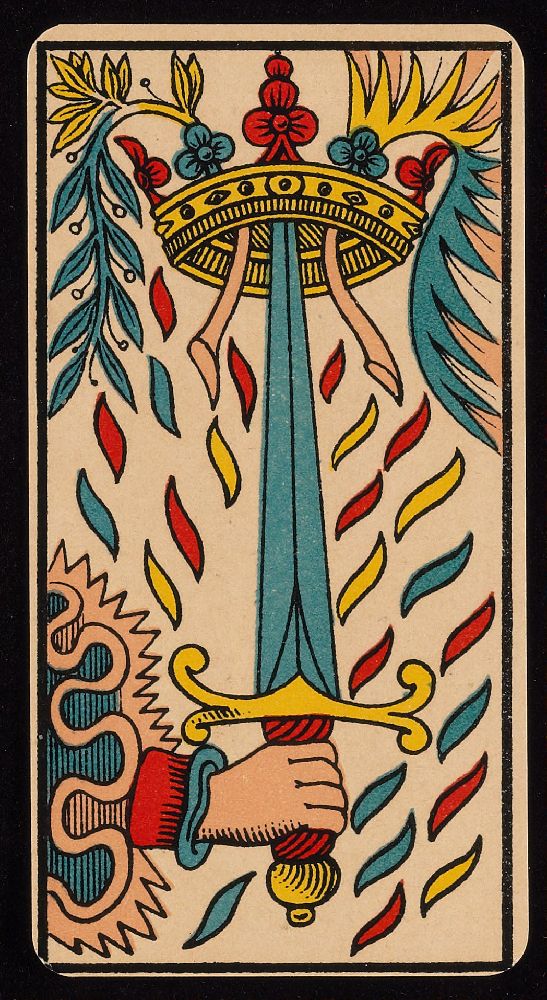
Ace of Swords - Granting
A blue sword held by the Hand of God (Manus Dei), topped with a crown and laurel leaves.
- General: Granting of practical power. It is not the highest, sacred power (gold sword), but a specific tool to cut through reality - a law, an order, a sword for use.
- Love: Receiving the power to decide in a relationship (who has the right to “cut”).
- Money: Granting of authority or a position that gives real, practical power.
- Work: Appointment to a position, receiving a tool of power (e.g., a signature, a seal, an order).
- Person: Someone who has just received real power to act and decide.
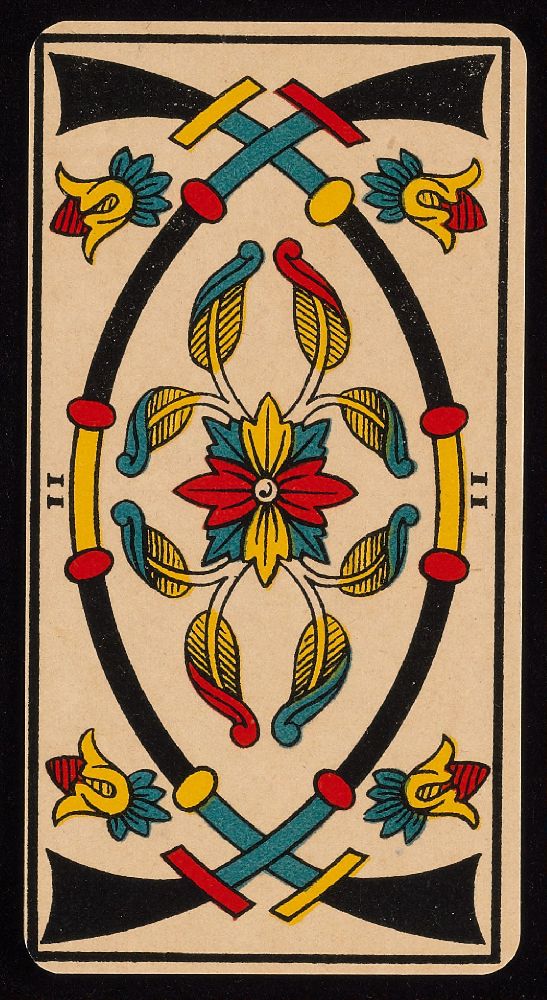
2 of Swords - Balance
A very complex, multicolored flower in the center of two scimitars.
- General: A delicate balance between strength and beauty. The first harmonious decision of power - an alliance, a truce, an elegant balance of forces where life still has space.
- Love: Mutual respect, elegant harmony at the start of a relationship.
- Money: Stable financial balance, an agreement where both sides keep their dignity.
- Work: A diplomatic agreement, a high-level alliance.
- Person: A diplomatic person who can combine strength with beauty and harmony.
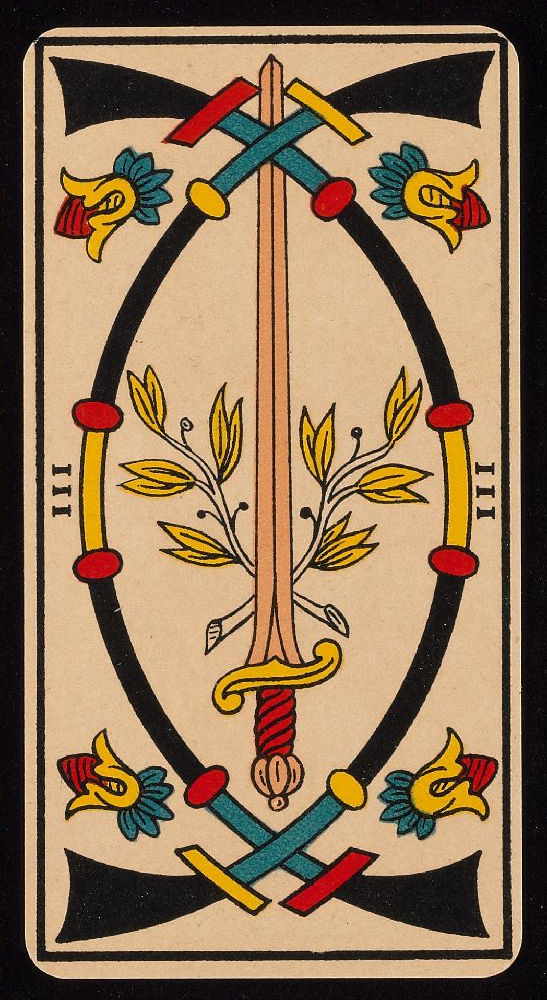
3 of Swords - Piercing
A plant with berries. In the Marseille tradition this plant is not clearly defined, but experts suggest:
- Barberry (Berberis vulgaris): Thorny bush with red berries, symbolizing suffering, blood, and purification.
- Noble Laurel: Symbols of victory of the mind.
- European Olive: Symbols of peace and reconciliation.
I decided to interpret the plants as Barberry.
A flesh-colored sword pierces two crossed gold branches.
- General: A personal, physical cutting of reality. A human (not abstract power) must pierce something valuable and thorny (honor, bond, tradition). This cut hurts physically and personally.
- Love: A very personal, physical wound in a relationship - something is pierced at an intimate level (betrayal, painful confrontation).
- Money: Personal loss resulting from a difficult decision that affects one’s identity.
- Work: A difficult decision where someone must “pierce” through their own current position or loyalty.
- Person: A person who wounds themselves to cut through something important - brave but suffering.
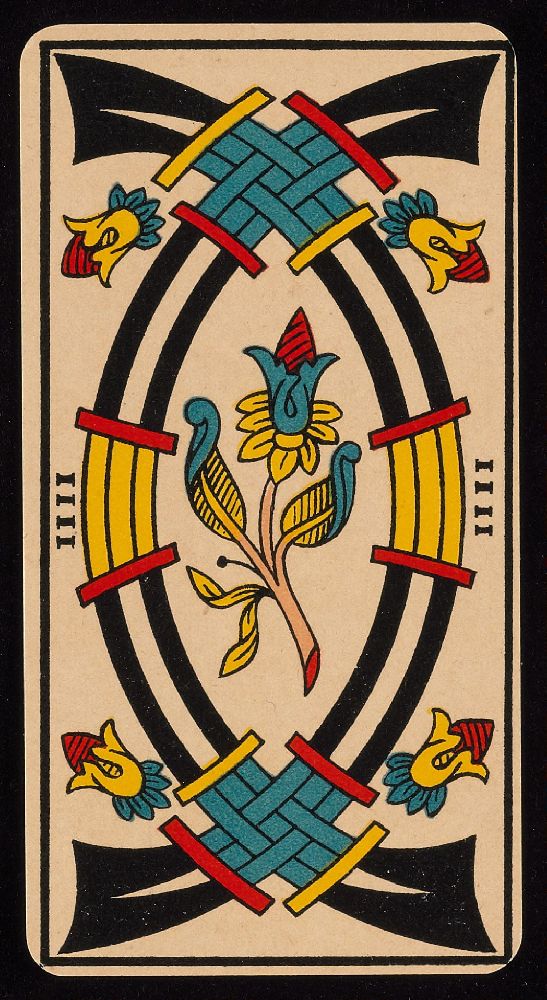
4 of Swords - Suspension
A simple, neutral blue flower with a red center. There no additional sword - no cut or harm on this card.
- General: A calm break after the cut. Life is still present but toned down. Time for regeneration and reflection.
- Love: A quiet period after a conflict, time to cool down.
- Money: Stabilization after previous losses.
- Work: A tactical break, reorganization of forces.
- Person: Someone who knows how to take a strategic pause.
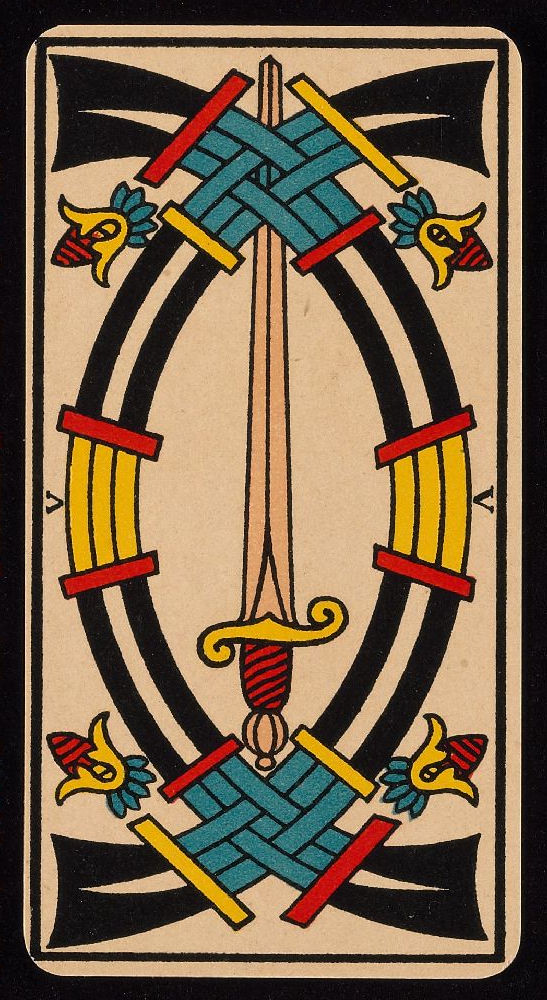
5 of Swords - Rivalry
Five scimitars + a central flesh-colored sword.
- General: A personal struggle for position among equals. Rivalry not at the level of great power, but between flesh-and-blood people - ambition, jealousy, fighting for influence. Victory is physical and often “dirty.”
- Love: Personal rivalry for another person, jealousy, fighting for attention and dominance.
- Money: A dispute over resources between people in the same “league.”
- Work: Conflict in a team or among equal colleagues - fighting for a better spot or recognition.
- Person: An ambitious person fighting for their position, often at the cost of relationships.
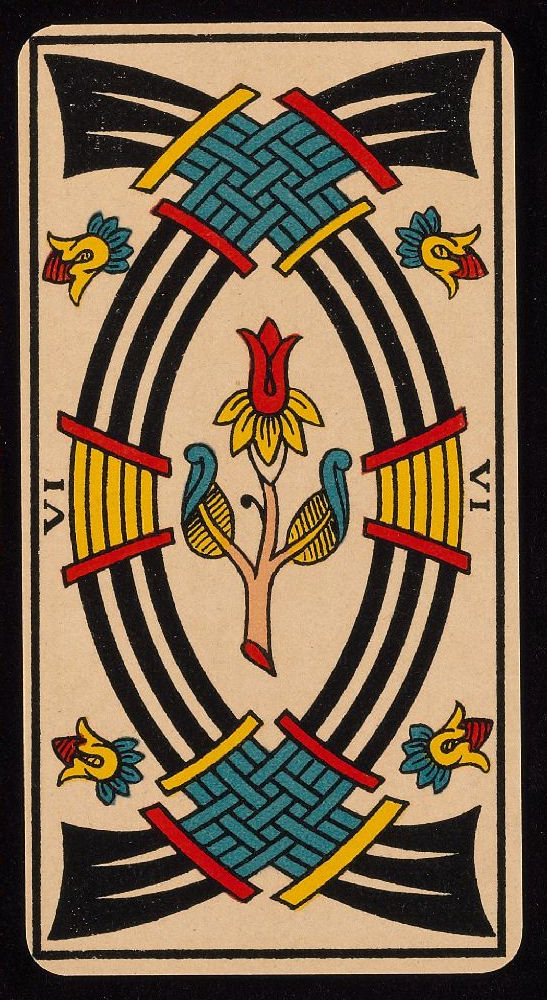
6 of Swords - Withdrawal
A red flower, similar to the one from 4 of Swords, but this one is more red.
- General: A calm passage through a difficult time. Life survived the cut but is weakened. Changing direction to a more peaceful one.
- Love: Leaving a toxic situation for a calmer relationship.
- Money: Sorting out affairs after a conflict.
- Work: Strategic withdrawal or changing the field of operation.
- Person: Someone who knows how to elegantly change course.
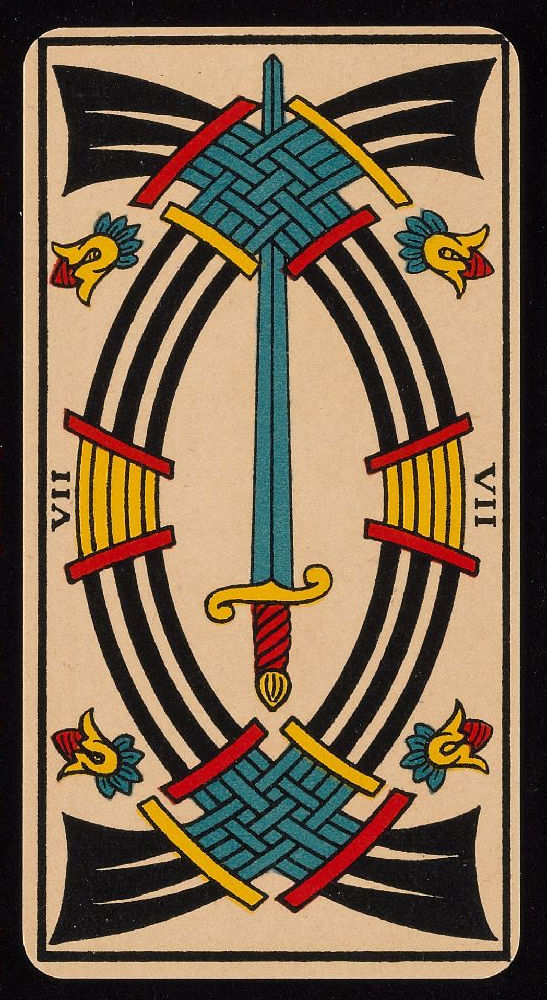
7 of Swords - Tactics
A blue, ordinary sword in the center.
- General: Everyday tactics and maneuvers of power. Clever actions, trickery, playing on several fronts.
- Love: Hidden intentions, testing loyalty, “guerrilla warfare” in a relationship.
- Money: Cleverly bypassing rules, avoiding losses, tactical financial moves.
- Work: Behind-the-scenes diplomacy, intrigues, defending one’s position.
- Person: A cunning tactician who acts cleverly, but not necessarily “cleanly.”
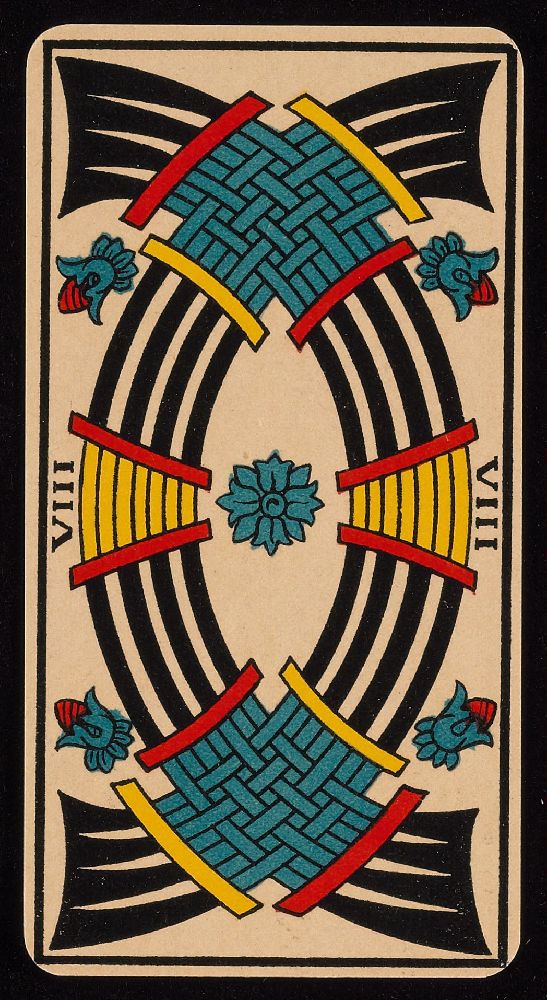
8 of Swords - Restriction
A very small blue cornflower head - almost lost among the swords.
- General: Strong restriction of space for life. Power suffocates itself through too many “cuts.”
- Love: Feeling trapped, rigid rules, no space for emotions.
- Money: Bureaucratic restrictions, legal traps.
- Work: Rigid structures, excess of rules and control, feeling tied down.
- Person: Someone who feels restricted by their own rules or the system.
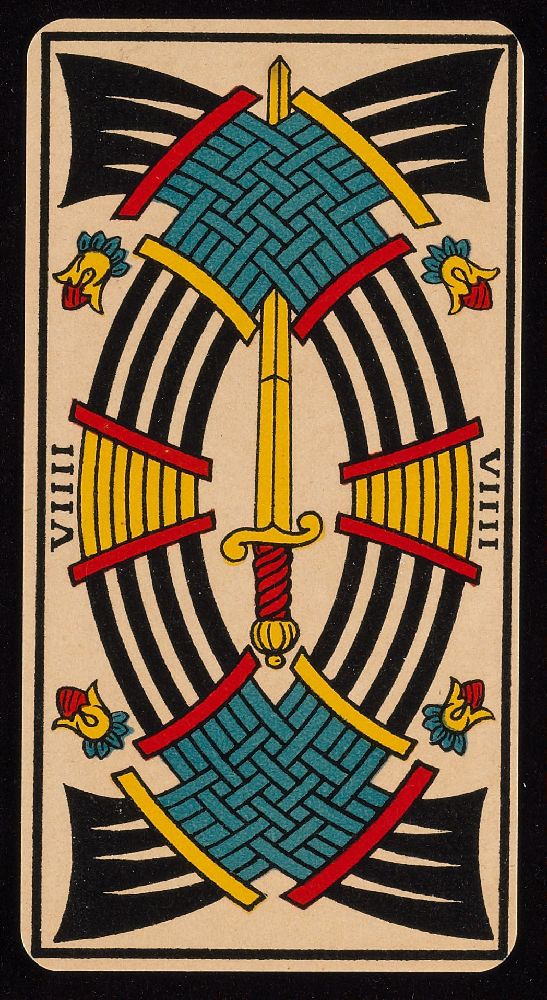
9 of Swords - Breaking
A gold sword - broken.
- General: The breaking of supreme power or honor. A crisis of authority, loss of faith in one’s right to rule.
- Love: Deep fear of losing position or being betrayed by someone important.
- Money: A crisis of confidence in one’s material position or status.
- Work: Fall of authority, broken professional pride.
- Person: A person whose internal power and strength have been broken.
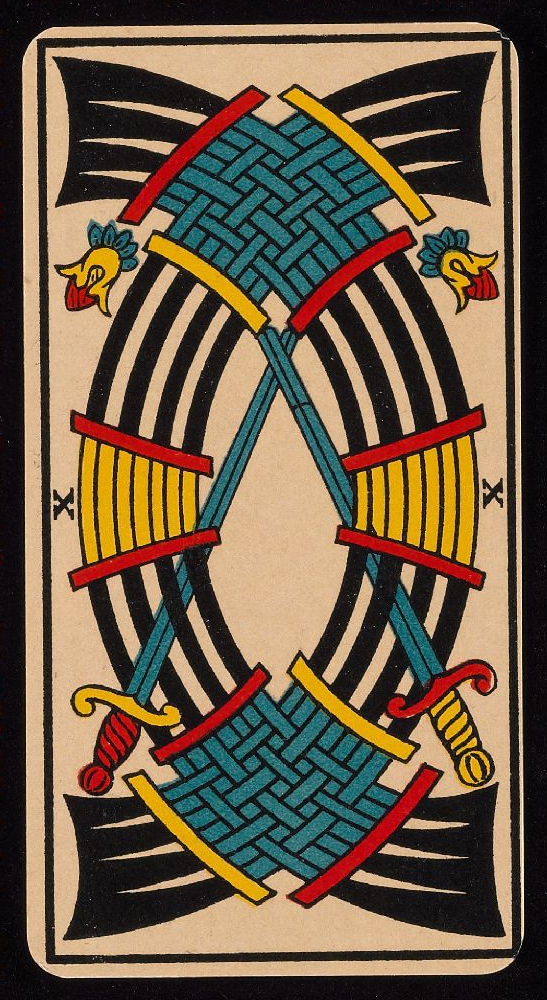
10 of Swords - The Fall
Two blue swords (crossed). One of them is broken. They are stuck between the other swords.
- General: The final cut, but made with a damaged tool. Power, law, or strength strikes, but it is already broken itself. A cycle ends, but not with glory or total defeat - it ends in a damaged and incomplete way, with a sense of loss on both sides. It is not an elegant ending, it is a painful and imperfect closure.
- Love: A definitive end to a relationship, but in a way that leaves scars. A breakup where someone (or both people) ends up hurt or broken. A “victory” for one side comes at the cost of being damaged.
- Money: The total closure of a financial matter, but with a feeling of loss or injustice. An inheritance, a divorce settlement, bankruptcy, or a broken contract after which something stays “broken” forever.
- Work: A fall from a position or the end of a career stage in a painful and messy way. Possible job loss, reorganization, or a failure where the power structure itself is damaged. “I won, but at the cost of my own sword.”
- Person: Someone who has gone through a final battle and came out of it broken - either physically or in terms of status and honor. It can also be a person who “won,” but the victory left them with permanent damage.
The final act of the suit, shown in the broken blades of the 9 and 10 of Swords, proves that cutting through reality too much eventually damages the tool of power itself.
This suit ends tragically. If the 9 and 10 represent any kind of completeness, it is the completeness of self-destruction. Power destroys itself by cutting too much and too often. Eventually, power (whether it is noble, knightly, or personal) breaks its own tool. It delivers a final, damaged blow, and after that, no more moves are possible.
Swords Court Cards - interpretation, meanings and symbols
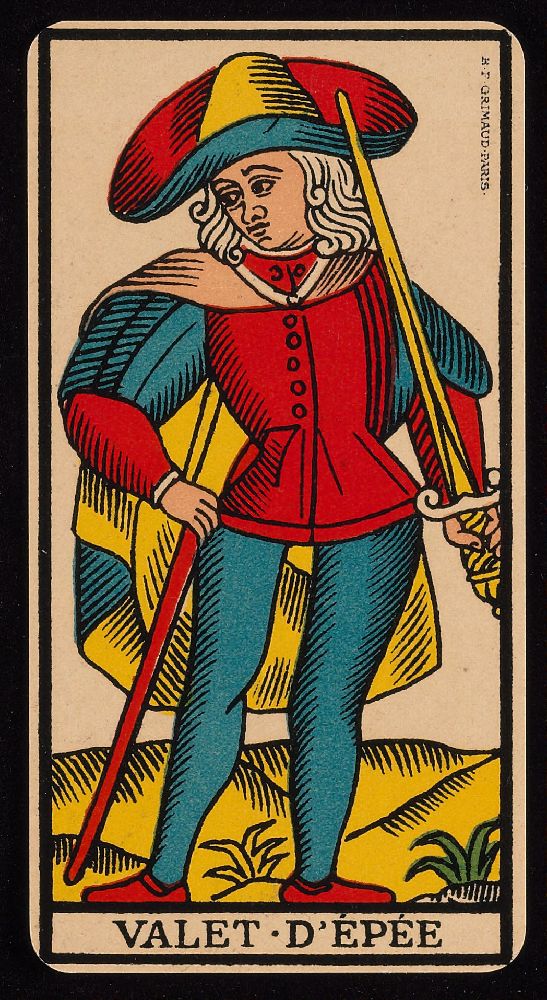
Page of Swords - Idealism
A gold sword + a red wooden staff.
- General: A young nobleman/squire at the start of his path. He carries two types of power: prestige (gold) and passion/anger (red). He is not yet mature - he combines a noble ideal with raw energy.
- Love: A young, ambitious man full of passion; his feelings are both noble and hot.
- Money: The start of a career - he has prestige but also a lot of “red” determination to fight.
- Work: A young official who combines honor with a fiery temperament.
- Person: A young person with noble ambitions, having both glow (gold) and fire (red).
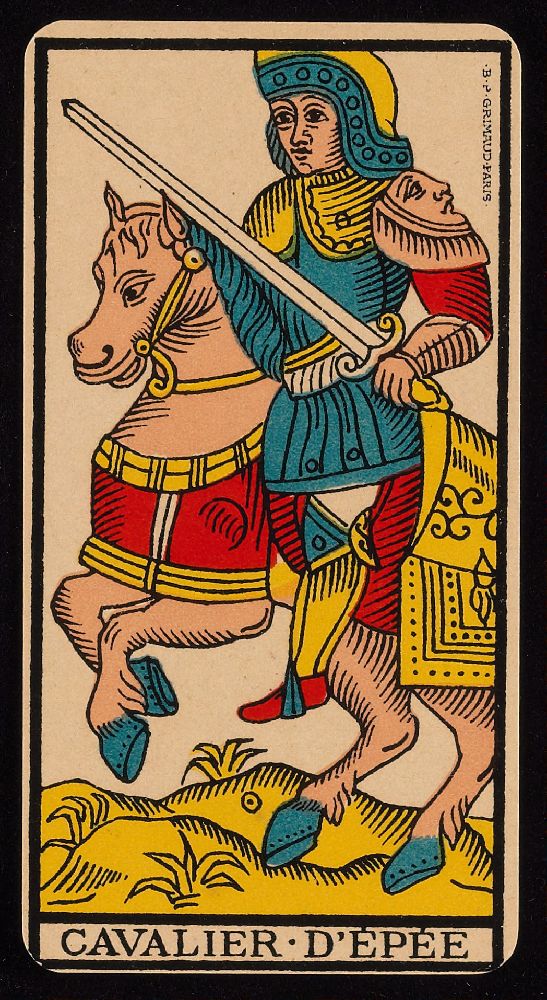
Knight of Swords - Charge
A sword of an undefined color (the color of the background on Grimaud and pale/gray color in Fournier).
- General: A charge without a clear glow. The knight acts, but his sword has lost color - power is mechanical, lacking charisma. Pure momentum.
- Love: Impulsive, aggressive passion - action without deep light.
- Money: Dynamic but “colorless” financial actions - momentum without prestige.
- Work: An officer who acts fast and decisively but without true authority.
- Person: A man of action - fast, brave, but his power feels faded or without deeper meaning.
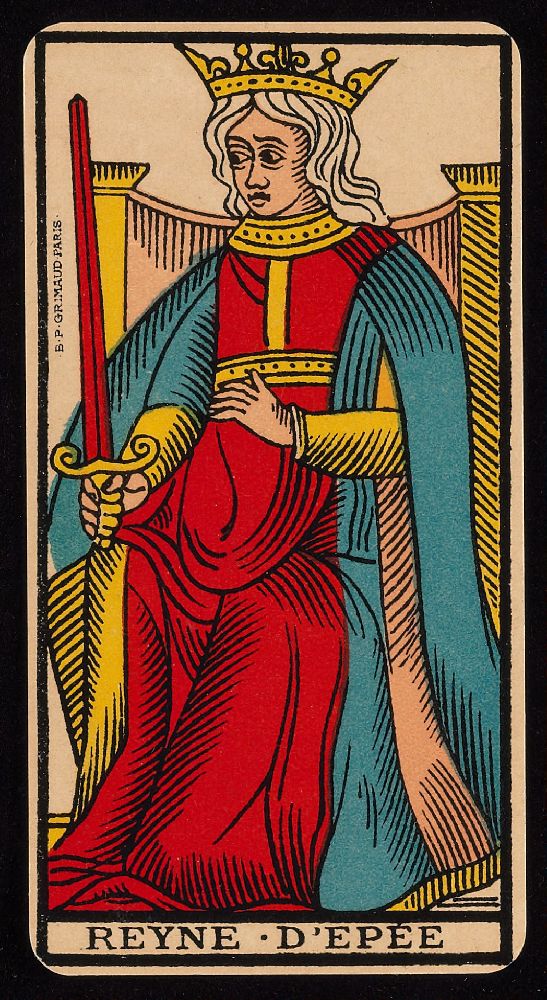
Queen of Swords - Anger
A red sword (very unusual!).
- General: Female power backed by anger, blood, or passion. The Queen cuts with emotional strength - her sword is alive, hot, and dangerous. Not cold justice, but a cut full of temperament.
- Love: A woman who cuts sharply and with passion - she can be ruthless if she feels threatened.
- Money: Managing wealth with anger or strong determination.
- Work: A woman in a high position who rules with temperament (often seen as “sharp”).
- Person: An intelligent, sharp woman with a strong, hot temperament - her “cut” is memorable.
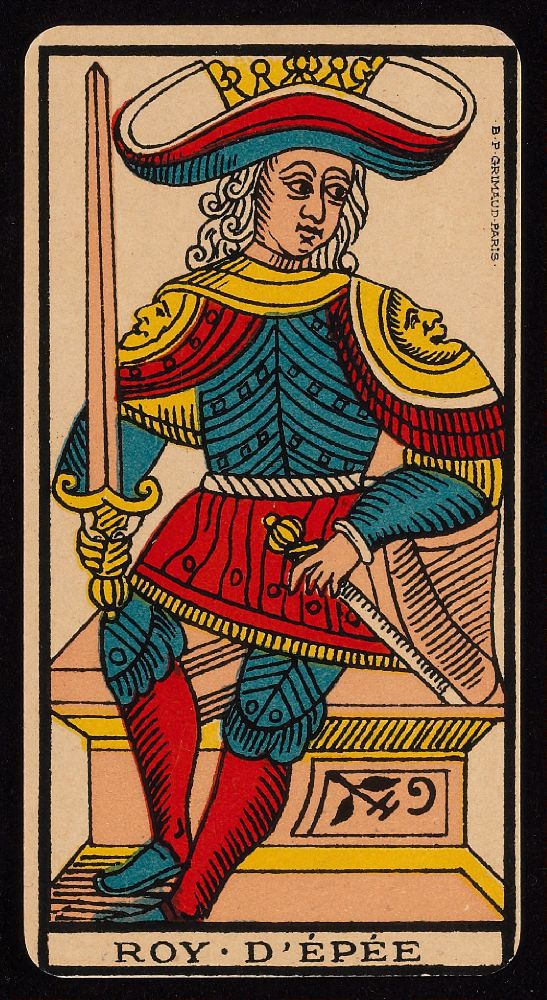
King of Swords - Experience
A flesh-colored sword + a colorless, natural wooden scepter.
- General: Mature, fully human power. The King rules not through prestige (gold) or passion (red), but through personal strength and experience. His power comes “from the earth,” earned through hard service.
- Love: A mature partner whose power is personal and practical - loyal but stern and “earthy.”
- Money: Material power based on personal experience and discipline, not on splendor.
- Work: The highest authority who rules through real strength of character, not a show.
- Person: A mature man of real human power - unyielding, experienced, “flesh and blood.”